Introduction
Fire extinguishers are one of the first lines of defence against a small fire. However, simply installing an extinguisher on a wall does not guarantee that it will work during an emergency. Its pressure, extinguishing agent, cylinder condition, hose, nozzle, and operating mechanism all need to remain in usable condition. This is why knowing when a fire extinguisher refilling service is required is important for offices, factories, warehouses, hotels, schools, hospitals, residential buildings, shops, and other commercial properties.
An extinguisher may require attention after use, pressure loss, leakage, physical damage, or during scheduled maintenance. In some situations, refilling may be appropriate, while in others, repair or complete replacement may be safer. Understanding these differences can help property owners and facility managers avoid relying on equipment that may not perform when needed.
When Does a Fire Extinguisher Need Refilling?
The most common situation requiring a fire extinguisher refilling service is when the extinguisher has been discharged. Even if it was used for only a short period, some extinguishing agent and internal pressure may have been lost. The unit should therefore be professionally checked before being placed back into service.
Refilling can also become necessary when an inspection identifies low pressure or insufficient extinguishing agent. The exact requirement depends on the extinguisher type, manufacturer specifications, service history, operating environment, and applicable fire-safety requirements.
After the Extinguisher Has Been Used
A partially used extinguisher should not simply be returned to its wall bracket. The remaining contents may not provide the required operating pressure or discharge performance.
After use, the cylinder should be assessed by a qualified service professional. The technician can determine whether it needs recharging, component servicing, or replacement.
When Pressure Has Been Lost
Many portable fire extinguishers include a pressure gauge. If the gauge shows that pressure is outside the normal operating range, professional attention is required.
Pressure loss can result from leakage, damaged components, environmental conditions, or other technical problems. Recharging without identifying the reason for pressure loss may leave the underlying issue unresolved.
What Signs Indicate That an Extinguisher Needs Servicing?
Regular visual inspection can help identify obvious problems before they become serious. Facility managers should check that extinguishers are accessible, correctly positioned, and free from visible damage.
Corrosion, dents, leakage, damaged hoses, blocked nozzles, missing safety components, and abnormal pressure readings can indicate that a fire extinguisher refilling service or other professional maintenance is required.
An extinguisher that has been accidentally discharged or tampered with should also be inspected. Some problems cannot be identified through a simple visual check, which is why professional Fire Extinguisher Maintenance Service should form part of an ongoing safety program.
Common Warning Signs
- Low or abnormal pressure indication
- Visible corrosion or cylinder damage
- Damaged hose or nozzle
- Evidence of leakage
- Broken or missing safety seal
- Partial or complete discharge
These signs do not automatically mean that the extinguisher must be replaced. A trained technician should determine whether refilling, repair, maintenance, or replacement is appropriate.
How Often Should Fire Extinguishers Be Serviced?
There is no single servicing schedule that applies identically to every fire extinguisher. Maintenance requirements can vary according to extinguisher type, manufacturer instructions, installation conditions, usage, inspection findings, and applicable standards.
Businesses should have a regular inspection and maintenance program rather than waiting for an extinguisher to be used. Visual checks can identify obvious problems, while professional servicing provides a more detailed assessment of equipment condition.
The surrounding environment also matters. Extinguishers installed in factories, workshops, warehouses, kitchens, chemical-handling areas, or locations exposed to moisture, dust, and heat may require closer monitoring.
A documented maintenance schedule allows facility managers to track equipment condition, previous service work, and future servicing requirements. This approach also helps identify which units need a fire extinguisher refilling service after use or inspection.
What Happens During Fire Extinguisher Refilling?
There is no single servicing schedule that applies identically to every fire extinguisher. Maintenance requirements can vary according to extinguisher type, manufacturer instructions, installation conditions, usage, inspection findings, and applicable standards.
Businesses should have a regular inspection and maintenance program rather than waiting for an extinguisher to be used. Visual checks can identify obvious problems, while professional servicing provides a more detailed assessment of equipment condition.
The surrounding environment also matters. Extinguishers installed in factories, workshops, warehouses, kitchens, chemical-handling areas, or locations exposed to moisture, dust, and heat may require closer monitoring.
A documented maintenance schedule allows facility managers to track equipment condition, previous service work, and future servicing requirements. This approach also helps identify which units need a fire extinguisher refilling service after use or inspection.
Inspection Before Recharging
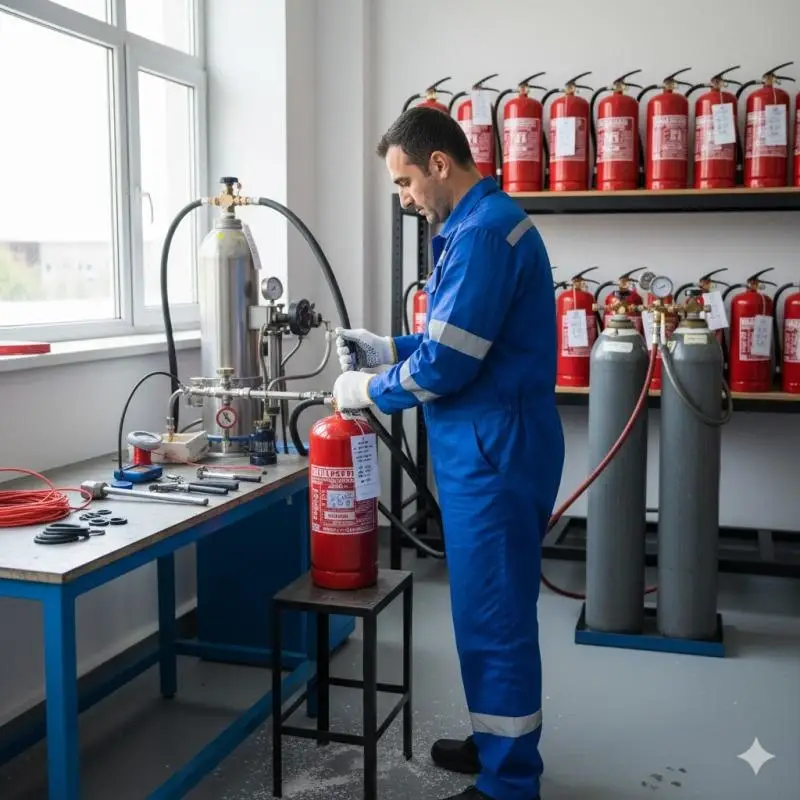
The cylinder, valve, hose, nozzle, pressure condition, and safety components should be checked before recharging. If serious corrosion, structural damage, leakage, or another unsafe condition is found, refilling may not be appropriate.
Correct Agent and Pressure
A professional Fire Extinguisher Recharging Service restores the appropriate extinguishing agent and pressure according to the equipment requirements.
Correct quantity and pressure are important because an incorrectly serviced extinguisher may not discharge properly when required.
Final Inspection
After servicing, the extinguisher should be checked for leakage and overall operating condition. Service information should also be recorded so businesses can maintain an accurate maintenance history.
Why Is Professional Refilling Important?
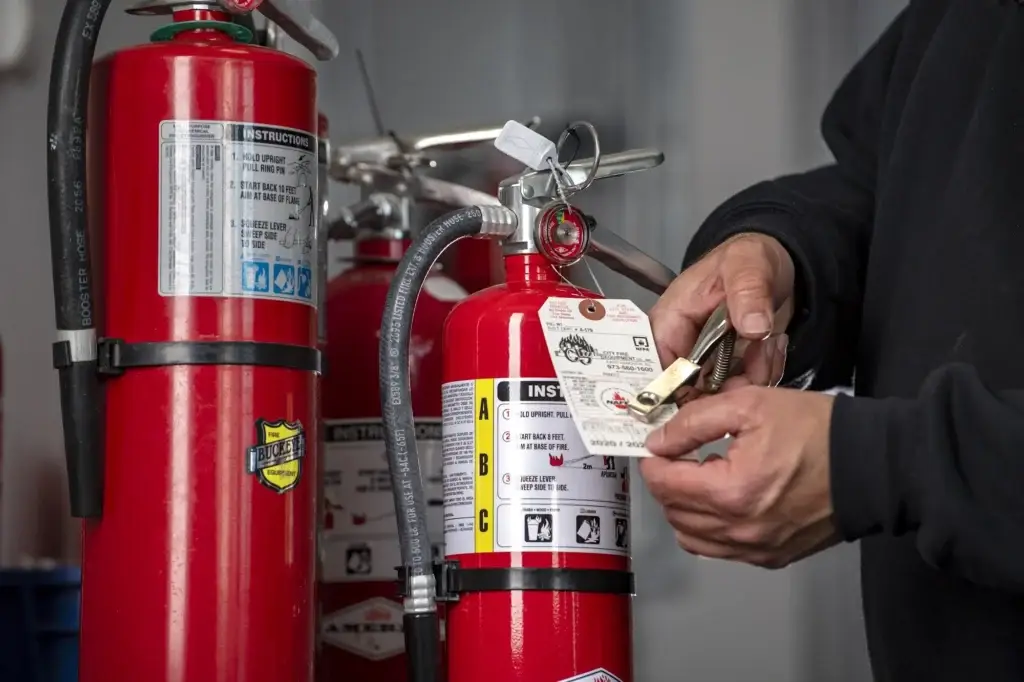
A fire extinguisher refilling service helps ensure that a discharged or under-pressure extinguisher is not returned to service without proper assessment.
Professional servicing can identify problems that may not be obvious to an ordinary user. Technicians can assess components, pressure condition, cylinder integrity, and suitability for continued use.
This is especially important for commercial properties containing multiple extinguishers. Without proper records, facility managers may not know which units have been serviced or which ones require further attention.
Professional servicing also reduces the risk of relying on an extinguisher that appears full but has an underlying technical problem.
Refilling vs Replacement: Which Is Better?
Refilling is not always the right solution. An extinguisher with severe corrosion, structural damage, persistent leakage, or another serious defect may need to be replaced rather than recharged.
A professional assessment should consider the condition of the cylinder, components, manufacturer requirements, service history, and applicable safety requirements.
For example, a cylinder in good condition with functional components may be suitable for recharge. In contrast, a badly damaged cylinder should not remain in service simply because refilling appears less expensive.
The objective should always be reliable fire protection rather than choosing the lowest immediate maintenance cost. A qualified technician can recommend whether fire extinguisher cylinder refilling or replacement is the safer option.
How to Choose a Fire Extinguisher Service Provider?
When selecting a provider, businesses should look beyond the price of refilling. Fire-safety equipment requires appropriate servicing procedures, trained technicians, suitable equipment, and proper documentation.
A reliable provider should be able to inspect different extinguisher types, perform appropriate recharging, identify equipment defects, provide maintenance support, and explain when replacement is necessary.
For businesses looking for fire extinguisher refilling service in Ahmedabad, local service availability can also be useful for faster collection, servicing, delivery, inspections, and follow-up maintenance.
Before choosing a provider, discuss the number and types of extinguishers, their locations, previous service history, and the property’s specific fire-safety requirements.
Important Maintenance Practices for Facility Managers
Fire extinguisher maintenance should be treated as an ongoing part of workplace safety rather than a one-time activity. Facility managers should maintain an inventory of extinguishers and track their locations, types, service history, and inspection status.
Extinguishers should remain easily accessible and should not be blocked by furniture, stock, equipment, or other materials. Staff should also know where extinguishers are located and understand basic emergency procedures.
Environmental conditions should be considered as well. Heat, humidity, chemicals, dust, physical impact, and frequent movement can affect equipment condition over time.
A structured maintenance program makes it easier to identify problems early and ensures that equipment receives appropriate professional attention. It also makes it easier to arrange a fire extinguisher refilling service promptly when a unit is discharged.
Conclusion
Fire extinguisher maintenance should be treated as an ongoing part of workplace safety rather than a one-time activity. Facility managers should maintain an inventory of extinguishers and track their locations, types, service history, and inspection status.
Extinguishers should remain easily accessible and should not be blocked by furniture, stock, equipment, or other materials. Staff should also know where extinguishers are located and understand basic emergency procedures.
Environmental conditions should be considered as well. Heat, humidity, chemicals, dust, physical impact, and frequent movement can affect equipment condition over time.
A structured maintenance program makes it easier to identify problems early and ensures that equipment receives appropriate professional attention. It also makes it easier to arrange a fire extinguisher refilling service promptly when a unit is discharged.