Table of Contents
Introduction
Every factory owner knows that a single fire can undo years of hard work in a few hours, yet many are unsure which protection measures their plant actually needs. Understanding an industry’s fire safety services is the first step towards protecting your workers, machinery and stock, and you can see what a complete setup looks like through the fire safety solutions for industries.
This guide explains, in plain language, what industrial fire safety services include, why they matter, which rules apply and how to decide what your own facility needs. It is based on the practical realities that fire safety engineers see during site visits, audits and mock drills in manufacturing units, warehouses and processing plants.
Why Industrial Facilities Face Higher Fire Risks
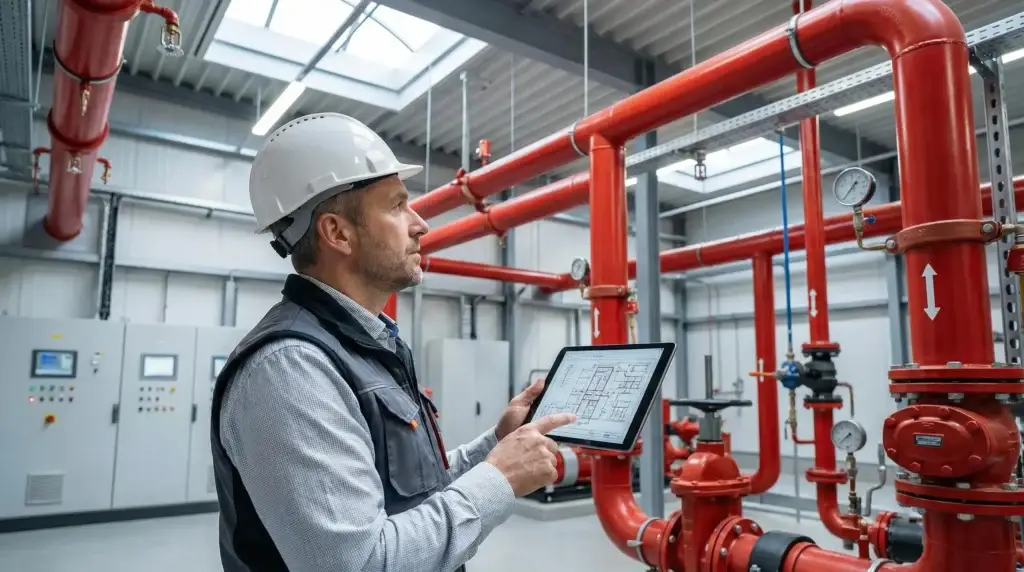
Industrial buildings carry a level of fire risk that offices and homes rarely face. Factories often store flammable liquids, gases, packaging material and raw stock in large quantities, while machines run for long hours and generate heat, friction and electrical load. Combustible dust from wood, textile, grain or metal processing can ignite very quickly, and hot work such as welding and cutting regularly introduces open sparks into busy working areas.
An industrial fire also behaves differently from a fire in a shop or a flat. Large open floor areas, high ceilings, stacked goods and hazardous materials let flames spread faster and make them harder to control with basic equipment. Many workers may be present at once, and some may be far from an exit. This is why workplace fire safety services for a plant need to be planned around the specific process, not copied from a generic template.
The consequences go well beyond burnt property. A serious fire can stop production for weeks, break supply commitments, cause injuries, void insurance claims and expose owners to legal action. Preventing a fire is almost always far cheaper than recovering from one, which is why investing in an industry’s fire safety service early makes practical sense.What Is an Industry's Fire Safety Service?
An industry’s fire safety service is a combination of professional assessment, system installation, maintenance, training and compliance support that keeps an industrial facility protected against fire. It covers everything from identifying hazards before a fire starts, to detecting smoke early, to controlling flames and helping people leave safely.
Many businesses use industrial fire safety services across manufacturing, chemical, pharmaceutical, textile, food processing, warehousing, power and oil and gas operations. Any site that stores combustible material, runs heavy machinery or employs a large workforce can benefit from them.
It helps to separate a service from equipment. A fire extinguisher or sprinkler is a product, while a service is the expertise around it: choosing the right type, installing it to standard, testing it on schedule, and making sure people know how to use it. A plant can own plenty of equipment and still be unsafe if nobody inspects or maintains it.Essential Fire Safety Services Every Industrial Facility Needs
Risk Assessment, Fire Detection and Alarm Systems
Everything starts with a fire risk assessment, where a trained professional walks through the facility, studies the processes, materials and layout, and lists what could go wrong. This shows which areas need stronger protection and which existing arrangements are no longer enough.
Detection comes next. Smoke detectors, heat detectors, flame detectors and manual call points are connected to a fire alarm system so that a developing fire is noticed in seconds rather than minutes. The right detector depends on the area, since a dusty production hall, a paint store and an electrical room all behave differently.
Fire Suppression and Firefighting Systems
Training, Evacuation Planning and Annual Maintenance (AMC)
Equipment alone cannot protect people. Employees should know what the alarm sounds like, where the assembly point is and how to use an extinguisher on a small fire. Regular mock drills, clearly marked exit routes, emergency lighting and exit signage turn a written evacuation plan into a habit.
Maintenance is equally important. An annual maintenance contract ensures that extinguishers are refilled, pumps are tested, detectors are checked and faults are repaired before they matter. A system that was perfect on installation day can fail silently a year later without this routine care.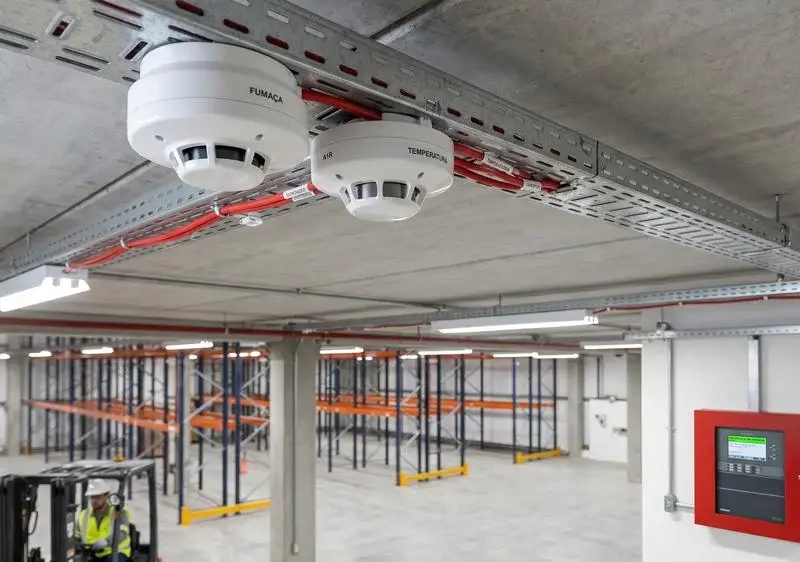
Specialized Fire Safety Services for High-Risk Industries
Some sectors need more than the standard package. Chemical and petrochemical plants deal with flammable vapours, pressurised gases and possible explosions, so they rely on gas detection, explosion protection and foam or deluge systems. Textile and paper mills have fine fibres and dust floating in the air, which makes housekeeping, dust control and early detection critical.
Food processing units and cold storage facilities face different problems, such as ammonia leaks, insulation panels that can burn and heavy electrical loads from refrigeration. Warehouses and logistics hubs with high-piled storage often need in-rack sprinklers because ceiling sprinklers alone may not reach a fire deep inside the stacks. Electrical panel rooms, control rooms and data areas are better protected with clean-agent systems, which extinguish fire without water damage. Choosing factory fire protection services that understand your exact process is what separates a compliant site from a truly safe one. The fire extinguisher range, for instance, differs widely by the type of fire risk in each area.
Fire Safety Regulations and Standards Your Facility Must Follow
Key Indian and International Standards
In India, the National Building Code sets the broad framework for fire and life safety in buildings, including industrial occupancies. Bureau of Indian Standards codes cover specific systems, for example IS 2189 for fire detection and alarm installation and IS 2190 for the selection and maintenance of portable extinguishers. State fire service rules add local requirements on top of these.
Internationally, NFPA standards such as NFPA 13 for sprinklers, NFPA 72 for alarm systems and NFPA 25 for inspection and testing are widely used as benchmarks, especially by facilities that serve global clients or insurers. OSHA guidelines on workplace emergency planning are another common reference point.Fire NOC: When It Is Required and How to Renew It
A fire No Objection Certificate is issued by the state fire department and confirms that a building meets the required fire safety norms. Industrial units generally need it before starting operations, and it usually has to be renewed periodically after an inspection. Applicants typically submit building plans, details of installed systems and supporting certificates, and the exact process varies from state to state. Planning renewals ahead of time avoids last-minute problems with inspections and insurance.
Penalties and Liability for Non-Compliance
How to Know Which Fire Safety Services Your Facility Needs
The right setup depends on what you make, what you store and how many people work in the building. Facility size, the type and quantity of materials, the number of floors, the size of the workforce and the condition of existing systems all shape the requirement. A small assembly unit with little stock will need a far lighter arrangement than a chemical blending plant, even if both are the same size.
A quick self-check can show whether your plant is due for a professional review. Ask yourself whether any of these apply:
- Your last fire risk assessment is more than a year old
- Extinguishers are past their refill or test date
- Staff have not taken part in a fire drill recently
- Exits, panels or hydrants are blocked by stock or equipment
- You have expanded, changed processes or stored new materials since the system was installed
How to Choose a Reliable Industrial Fire Safety Service Provider
Picking the right partner matters as much as picking the right equipment. Start by checking that the provider holds the necessary licences and approvals, uses products that meet recognised standards and employs trained engineers rather than only sales staff. Ask for references from similar industries, since experience with a textile mill does not automatically translate to a pharmaceutical plant.
It is also worth asking how they handle site surveys, documentation, after-sales support and emergency response. A dependable provider will explain the reasoning behind each recommendation, give you clear records for audits and insurers, and remain available after installation. Local knowledge helps too, because a team familiar with your state’s fire department requirements can guide you through approvals more smoothly. When you compare options, look for an industry’s fire safety service partner that is comfortable with long-term maintenance, not one that only wants to complete the installation.Conclusion
Fire protection in an industrial unit works best when it is planned as a complete system covering assessment, detection, suppression, training, maintenance and compliance. Knowing what an industry’s fire safety service includes helps you ask better questions, avoid gaps and make decisions based on real risk rather than guesswork. Since the cost of prevention is always smaller than the cost of recovery, it makes sense to review your setup before an emergency forces you to.
If you would like a professional opinion on your factory, warehouse or plant, the team at New India Fire Tech can help you with assessment, installation and ongoing maintenance.