Table of Contents
Introduction
Every year, thousands of fires across India cause loss of life, property damage, and business disruption that could have been significantly reduced or entirely prevented with the right preparation. The problem is rarely a lack of regulation. India has clear fire safety standards under the National Building Code and BIS guidelines. The problem is a lack of awareness. Most people do not know what fire safety equipment they actually need, what each tool does, or how to use it when a fire breaks out.
This guide changes that. Written for homeowners, business managers, safety officers, and anyone responsible for protecting a space and the people in it, this is your complete reference for understanding fire protection tools, how they work, and how to deploy them effectively.
What Is Fire Safety Equipment and Why Does It Matter?
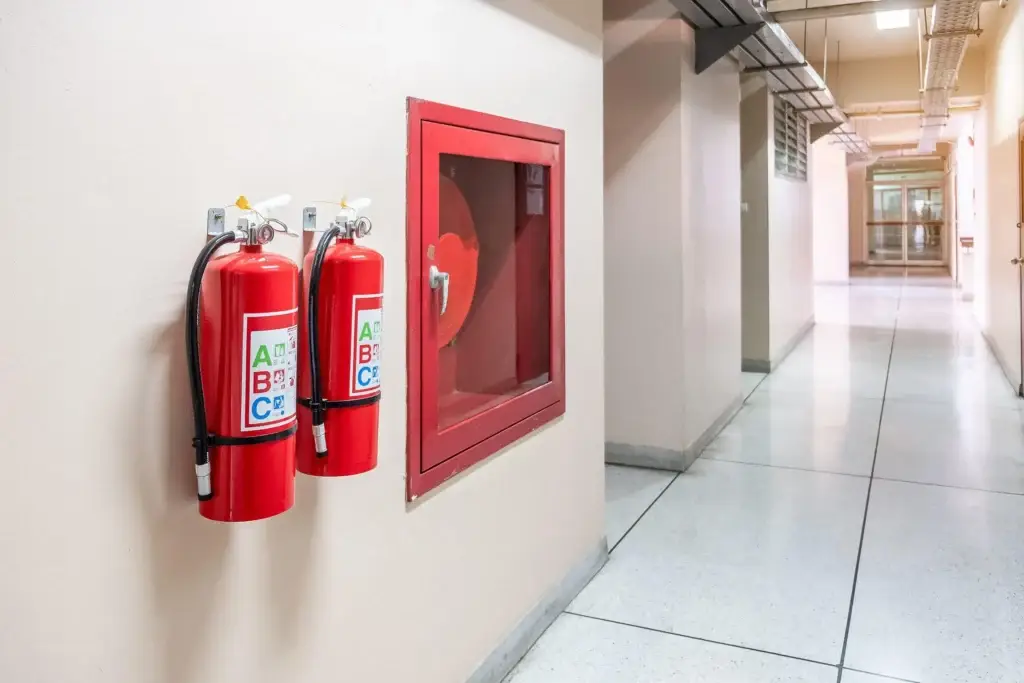
Fire safety equipment refers to the full range of tools, systems, and devices designed to detect fires early, suppress them quickly, and protect lives during an emergency. This is not just about the red cylinder on the wall. It encompasses detection technology, suppression systems, protective gear, and emergency signage, all working together as a coordinated layer of protection.
The reason this matters so profoundly is that fire does not give you time to improvise. The first 60 to 90 seconds of a fire are the window in which a portable extinguisher can make a meaningful difference. After that, the priority shifts entirely to evacuation. Having the correct equipment in the correct place, maintained to the correct standard, is what separates controlled outcomes from catastrophic ones.
The Real Cost of Being Unprepared
Understanding Fire Classes: The Foundation of Every Decision
No piece of fire protection equipment works universally across all fire types. Every extinguisher, suppression system, and agent is designed around the fire’s fuel source, which is why fire classification exists. Class A covers solid combustibles like wood, paper, and fabric. Class B covers flammable liquids, including petrol and diesel. Class C covers electrical fires originating from wiring or equipment. Class D covers combustible metals such as magnesium and sodium. Class K covers high-temperature cooking oils and fats in commercial kitchens.
Understanding these classes is not optional knowledge for safety officers, it is the prerequisite for selecting any fire protection tool correctly. A mismatched extinguisher can fail to suppress the fire, contaminate the environment, or in some cases, such as using water on burning oil or electrical fires, actively endanger everyone nearby.
Types of Fire Safety Equipment: A Complete Overview
Portable Fire Extinguishers
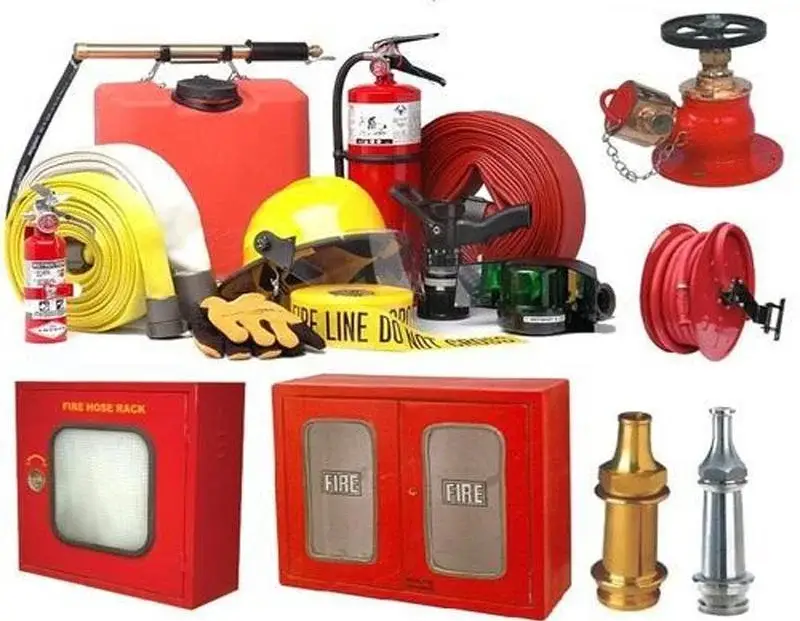
Portable fire extinguishers are the cornerstone of any fire safety equipment setup, the first-response tool that gives you a genuine chance to stop a small fire before it grows. They come in several types, each engineered for a specific fire class.
Water extinguishers cool Class Solid-material fires and are best suited for libraries, warehouses, and buildings with minimal electrical risk. Foam extinguishers work on both Class A and B fires through a dual action of cooling and surface sealing, making them ideal for automotive workshops and fuel storage areas. ABC dry chemical extinguishers are the most common choice for general-purpose use across homes, offices, and retail spaces because they interrupt the combustion chain across three fire classes simultaneously. CO₂ extinguishers leave no residue and are essential for server rooms, data centers, and environments with sensitive electronics. Wet chemical extinguishers are specifically designed for Class K fires in commercial kitchens, reacting with superheated oil through saponification to create a cooling, oxygen-sealing foam layer. Clean agent extinguishers using FM-200 or Novec 1230 provide fast, residue-free suppression ideal for museums, telecom rooms, and archives.
Selecting the wrong extinguisher type is not a minor inconvenience, it is a fire safety failure. Always match the extinguisher to the dominant fire risk in the space it protects.
Fire Detection and Alarm Systems
Detection is the first line of defense. A fire that is identified within seconds of ignition gives occupants time to respond either with a suppression tool or through evacuation. Smoke detectors sense combustion particles in the air and trigger alerts before visible flames appear. Heat detectors respond to rapid temperature rise and are better suited to dusty or steamy environments where smoke detectors generate false alarms. Carbon monoxide detectors identify toxic gas buildup from incomplete combustion, which is a silent but deadly hazard in enclosed spaces with fuel-burning appliances.
For commercial and industrial buildings, fire alarm systems must be networked, monitored, and integrated with emergency lighting and public address systems. A standalone battery-operated smoke alarm is sufficient for a bedroom; it is entirely insufficient for a multi-floor manufacturing facility.
Automatic Sprinkler Systems
Sprinkler systems are the most consistently effective form of automatic fire suppression available. They activate at the point closest to the heat source, delivering water or suppression agent directly onto the fire without requiring any human action. Contrary to popular belief, only the sprinkler heads in the immediate vicinity of the fire activate, not the entire system simultaneously. This precision minimizes water damage while maximizing suppression effectiveness.
Wet-pipe sprinklers, the most common type, keep water in the pipes at all times and respond instantly. Dry-pipe systems, used in freezing environments, keep the pipes pressurized with air until activation. Pre-action systems add an additional trigger requirement, making them suitable for data centers and libraries where accidental discharge would be catastrophic. Automatic sprinkler systems are arguably the single most important fire protection investment a commercial or industrial building owner can make.
Fire Hose Reels and Hydrant Systems
Fire hose reels provide a continuous water supply for fighting larger fires and are required in commercial buildings, hospitals, shopping complexes, and multi-story residential blocks under Indian fire safety regulations. Unlike portable extinguishers, which have a limited discharge capacity of 30 to 60 seconds, hose reels connect directly to the building’s water supply and allow sustained firefighting. Hydrant systems extend this capability to external firefighting access for fire brigades responding to major incidents.
These systems require regular testing of water pressure, hose condition, valve operation, and connection integrity. A hose reel that has not been tested in two years cannot be trusted to perform when it matters.
Fire Blankets
Fire blankets are a frequently underestimated but genuinely useful piece of fire protection gear, especially for home kitchens and small workshops. Made from woven glass fiber, a fire blanket smothers small fires by cutting off their oxygen supply, particularly effective on Class K kitchen fires and clothing fires. They are also used to wrap around a person whose clothing has caught fire, providing immediate protection during evacuation.
Their advantages are simplicity, zero maintenance requirement, and zero residue. For any environment where a quick, clean first-response option is needed alongside other fire safety equipment, fire blankets earn their place on the wall.
Emergency Lighting and Evacuation Signage
This category is often overlooked entirely when people think about fire protection, but it is critical. In a fire scenario, buildings fill with smoke rapidly. Visibility drops to near zero. Panic sets in. Emergency lighting systems, which activate automatically when main power fails, and clearly marked evacuation signage, positioned at consistent intervals throughout a building, are what allow occupants to reach exits safely even in zero-visibility conditions.
Under Indian fire safety regulations, emergency lighting must provide a minimum of three hours of illumination and must be tested monthly by a qualified technician.
Choosing the Right Equipment for Your Environment
For Homes
A combination of an ABC dry chemical extinguisher, at least one smoke detector per floor, and a fire blanket in the kitchen covers the vast majority of residential fire risks. Larger homes should consider networked smoke detection and carbon monoxide detectors near any gas-powered appliances.
For Offices and Commercial Buildings
Offices require ABC and CO₂ extinguishers distributed by floor area, a fully networked alarm system, emergency lighting, hose reels in corridors, and a documented evacuation plan. Fire warden training for designated staff members is equally important.
For Industrial and Manufacturing Units
Industrial sites require a comprehensive fire risk assessment before specifying any equipment. The fire hazards in a chemical storage facility differ entirely from those in a textile mill or a metalworking shop. Site-specific hazard mapping determines which extinguisher types, suppression systems, and detection technologies are appropriate.
Fire Safety Compliance in India
Maintenance: The Most Neglected Part of Fire Protection
Final Thoughts
Fire safety is not a one-time purchase. It is an ongoing commitment to understanding your environment, selecting the right equipment, training your people, and maintaining your systems consistently. Every category of fire safety equipment serves a specific purpose within a larger system of protection, and the effectiveness of that system depends entirely on how seriously you take each component. The right tools, in the right place, maintained to the right standard, are what separate controlled outcomes from catastrophic ones.
New India Fire Tech is a trusted, certified fire safety solutions provider with deep expertise across every category of fire protection from portable extinguishers and detection systems to automated suppression and complete building compliance solutions. Whether you are building a fire safety system from scratch, upgrading outdated equipment, or seeking professional annual servicing, their certified professionals ensure full compliance with BIS standards and Indian fire safety regulations. Contact New India Fire Tech today because real fire safety is built before the emergency, not during it.