Table of Contents
Introduction
Fire does not wait for you to be prepared. It starts small, spreads fast, and turns catastrophic within minutes. Whether it ignites in a commercial kitchen, a server room, or a factory floor, the difference between a minor incident and a devastating loss often comes down to one thing having the right fire suppression equipment within reach and knowing how to use it. Most people assume that any fire extinguisher will handle any fire. That assumption is not just wrong; it can be deadly.
This complete guide covers every major fire extinguisher type, the science behind how each one works, and exactly where each belongs. Whether you are a homeowner, a business owner, or a fire safety officer, understanding your equipment is the foundation of genuine fire protection.
Why Knowing Your Fire Extinguisher Types Matters
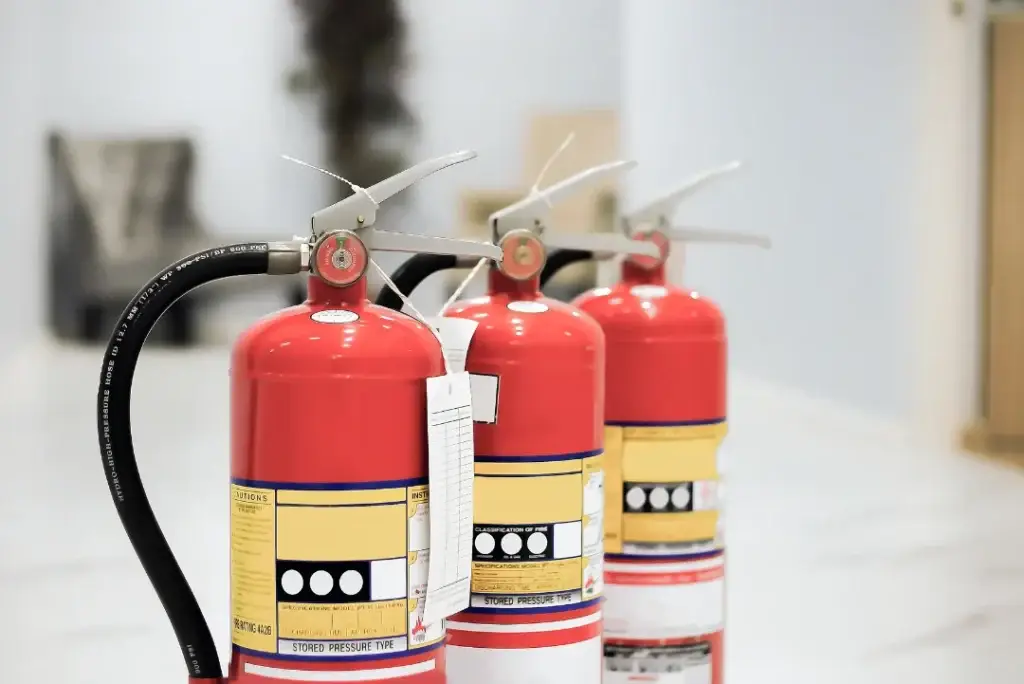
Walk through most commercial buildings and you will find red cylinders mounted near exits. But ask the people around them what type they are, and most cannot tell you. That knowledge gap is a real safety risk. Using the wrong extinguishing agent on the wrong fire class does not just fail it actively worsens the situation. A water-based extinguisher on an electrical fire creates an electrocution hazard. A dry powder unit deployed in a sealed kitchen fills the air with particles that impair breathing. The fire may not even go out.
Fire safety begins with awareness. And awareness begins with understanding what fire extinguisher types exist, why each one was engineered, and what specific fire scenarios they were built to address.
Understanding Fire Classes First
Every extinguisher is designed around a fire classification system. This system categorizes fires based on the type of fuel involved, which directly determines what suppression method will work. Before selecting any portable fire extinguisher, you must understand these classes.
Class A fires involve ordinary solid combustibles wood, paper, fabric, rubber, and most plastics. These are the fires most common in homes and general office environments.
Class B fires are fueled by flammable liquids such as petrol, diesel, paint thinner, and solvents. They spread rapidly across surfaces and require a smothering approach rather than a cooling one.
Class C fires originate from electrical equipment, wiring faults, or overloaded circuits, and they demand a non-conductive extinguishing agent to avoid shock hazards.
Class D fires involve combustible metals like magnesium, sodium, and titanium, which are rare but extraordinarily intense.
Class K fires cover high-temperature cooking oils and animal fats specific to commercial kitchen environments, where standard agents simply cannot cope with the heat levels involved.
This classification system is not theoretical knowledge, it is the practical map you use to navigate every fire extinguisher type decision correctly.
Complete Guide to Fire Extinguisher Types
Water Fire Extinguisher
Water extinguishers are among the most basic fire safety equipment available, and they work on a simple principle: cooling the burning material below its ignition point stops combustion. They are effective exclusively on Class A fires involving solid combustible materials. The major limitation is equally straightforward water conducts electricity, and it reacts violently with burning oils. These units are best suited for warehouses, libraries, schools, and similar environments where the fire risk is purely from solid materials and electrical hazards are minimal.
Foam Fire Extinguisher
Foam extinguishers offer a significant upgrade in versatility. They handle both Class A and Class B fires through a dual-action mechanism: the foam cools the burning material while simultaneously creating a sealing film over flammable liquid surfaces, cutting off the oxygen supply and preventing re-ignition. Modern AFFF (Aqueous Film-Forming Foam) variants are particularly effective because they spread rapidly across liquid surfaces and leave a protective barrier even after the foam settles. Automotive workshops, fuel depots, paint storage areas, and industrial yards are among the most common environments where foam-based fire extinguisher types prove their worth daily.
Dry Chemical (ABC) Extinguisher
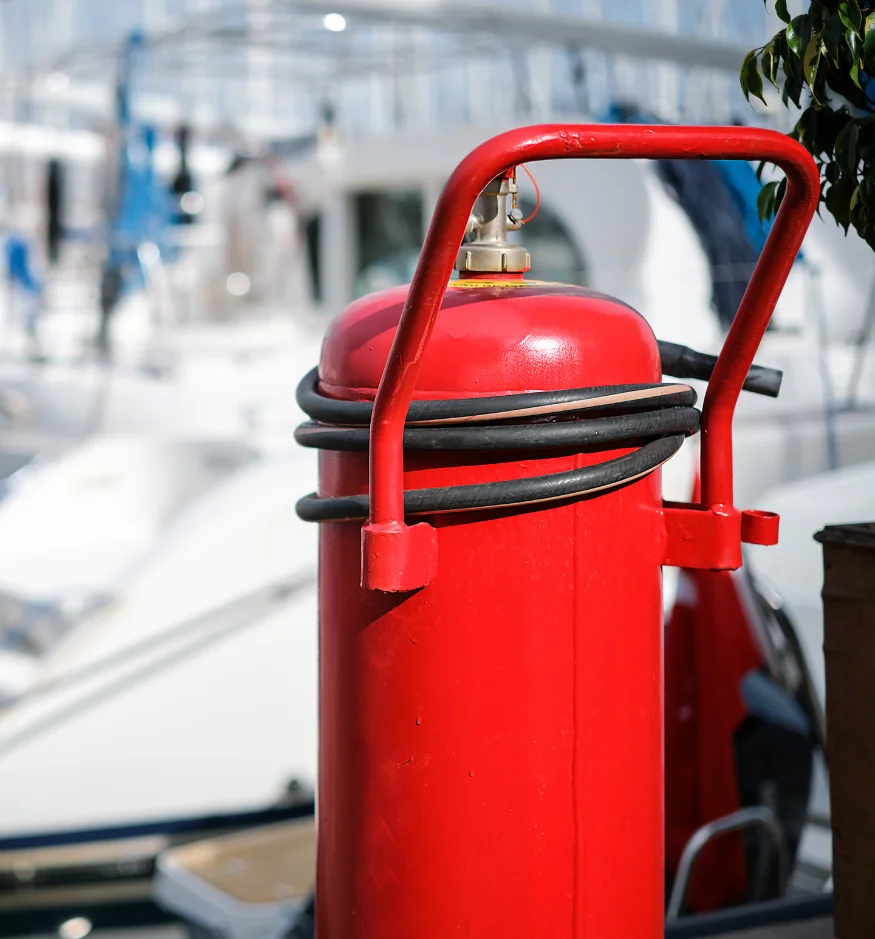
The ABC dry chemical extinguisher is the most widely deployed fire safety tool across both residential and commercial settings and with good reason. It is rated for Class A, B, and C fires, making it a genuinely versatile all-in-one fire protection solution. The active agent, typically monoammonium phosphate, works by chemically interrupting the combustion chain reaction rather than simply cooling or smothering the fire. This mechanism makes it fast-acting and highly effective across a broad range of hazards.
The practical trade-off is residue. After discharge, the powder coats every surface in the vicinity, which can cause significant damage to sensitive electronics and machinery. For general offices, retail spaces, schools, and homes, however, the ABC extinguisher remains the most cost-effective and practical of all fire extinguisher types available.
CO₂ (Carbon Dioxide) Extinguisher
Carbon dioxide extinguishers are the go-to fire suppression tool for environments where protecting equipment matters as much as stopping the fire. CO₂ works by displacing oxygen in the immediate vicinity of the fire, suffocating combustion without leaving any residue or moisture. This makes it the ideal choice for server rooms, data centers, control rooms, medical labs, and any space filled with expensive electronics that powder or water would destroy.
One important operational limitation: CO₂ disperses immediately in open or windy environments, rendering it ineffective outdoors. It also provides no lasting cooling effect, meaning deep-seated Class A fires can re-ignite once the gas dissipates. Within its designed context, though, the wet chemical extinguisher remains one of the most critical and specialized fire extinguisher types in modern fire protection.
Wet Chemical Extinguisher
Wet chemical extinguishers exist specifically because commercial kitchen fires are a unique beast. When cooking oil reaches temperatures above 340°C and ignites, the resulting fire is too intense and too reactive for any standard extinguishing agent. Wet chemical units release a fine mist of potassium-based solution that reacts with superheated oil through a process called “saponification,” essentially turning the oil surface into a soapy foam that both cools the oil and seals it from oxygen. The result is reliable suppression of Class K fires without the explosive splashback risk that water would cause on hot oil.
Any commercial kitchen, restaurant, hotel, or food processing facility should treat wet chemical fire suppression as a non-negotiable safety investment, not an optional upgrade.
Clean Agent Extinguisher
Clean agent extinguishers use specialized gaseous compounds such as FM-200 or Novec 1230 to suppress fires without leaving any trace, residue, or moisture. They extinguish through a combination of physical cooling and chemical chain-breaking, and they act within seconds of discharge. More importantly, they are designed to be safe for use around people in enclosed spaces, making them the preferred fire extinguisher type for museums, archives, aircraft cabins, and telecommunications facilities where both human safety and asset preservation are paramount.
Clean agent systems are often integrated into automated suppression setups and represent the premium tier of fire protection technology in high-value environments.
Dry Powder Extinguisher (Class D)
Choosing the Right Extinguisher for Your Space
For Homes
An ABC dry chemical extinguisher covers most home fire risks. If you cook regularly with high-heat oils, placing a small wet chemical unit near the stove adds meaningful protection.
For Offices and Commercial Buildings
A combination of ABC and CO₂ extinguishers provides the best coverage ABC for general areas and CO₂ near electrical panels and server zones.
For Industrial and Manufacturing Units
Industrial environments need a site-specific fire hazard assessment. A facility storing flammable solvents requires foam units, while a metalworking plant needs Class D equipment. Generic solutions are insufficient at this scale.
For Restaurants and Commercial Kitchens
Wet chemical extinguishers are mandatory at every cooking station. They should be paired with a properly maintained hood suppression system for full kitchen-level fire protection.
The PASS Technique: Using Any Extinguisher Correctly
Owning the right fire extinguisher type is only half the solution. Using it correctly under pressure requires practiced knowledge of the PASS technique, the universal method recommended by fire safety authorities worldwide.
Pull the safety pin from the handle to break the tamper seal. Aim the nozzle directly at the base of the fire, not at the visible flames above it. Squeeze the handle firmly to release the extinguishing agent. Sweep the nozzle slowly from side to side in a controlled motion across the fire’s base until it is fully extinguished. This technique applies across virtually every portable fire extinguisher category and is the foundation of hands-on fire safety training.
Maintenance: The Overlooked Half of Fire Protection
Conclusion
Choosing the right fire extinguisher type for your environment is not always straightforward, and getting it wrong puts people and property at risk. That is where New India Fire Tech comes in.
New India Fire Tech is a certified fire safety solutions provider offering expert guidance on selecting, installing, and maintaining every category of fire protection equipment from standard portable extinguishers for homes and offices to complete automated fire suppression systems for industrial and commercial environments. Their team conducts on-site fire risk assessments, recommends the correct extinguisher types and quantities based on your specific hazards, and ensures full compliance with Indian fire safety regulations and BIS standards.
Whether you are setting up fire protection for a new facility, replacing outdated equipment, or seeking professional servicing and refilling support, New India Fire Tech has the expertise, the product range, and the commitment to keep you protected.